
How to Build a Marketing Dashboard That Drives Action
 OprahDecember 16, 20251 Mins read0
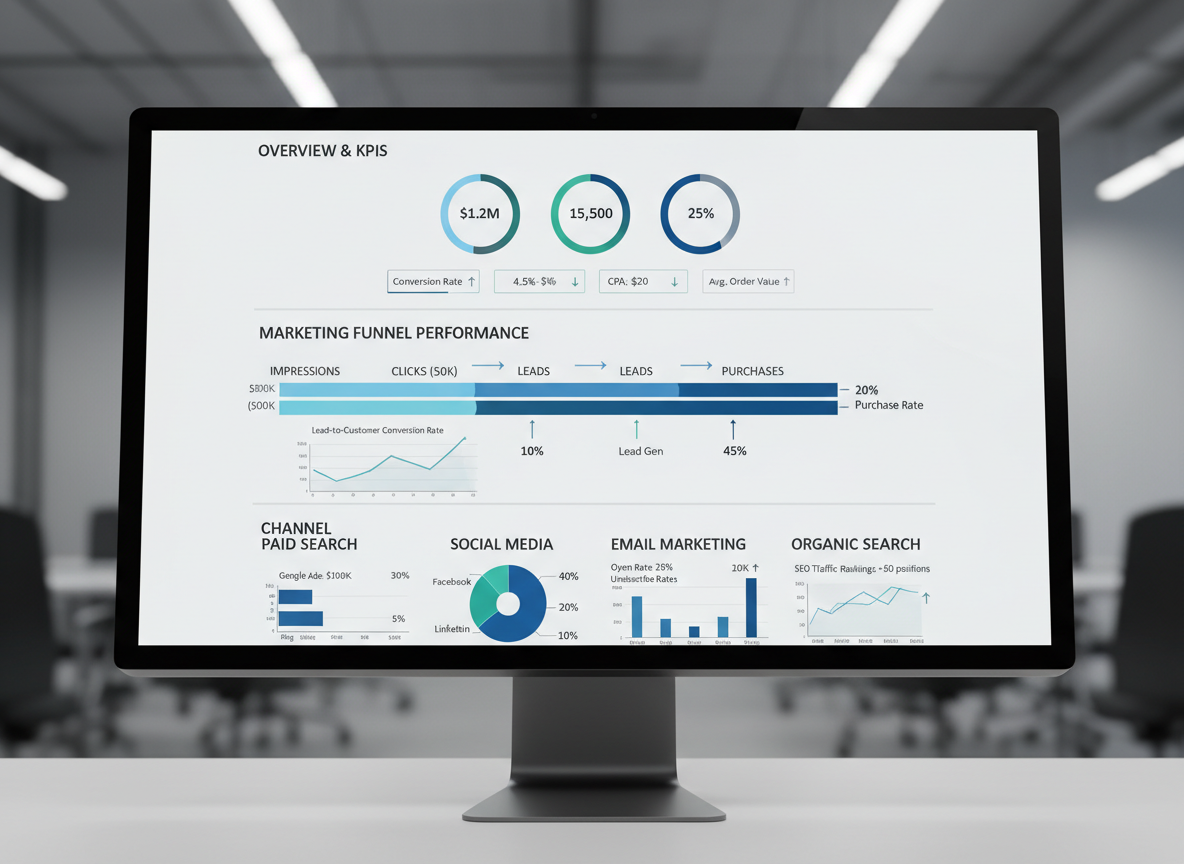
Most marketing dashboards fail for the same reason: they’re built to look impressive, not to drive insights. Charts, colors, and widgets mean nothing if the dashboard doesn’t guide decision-making. A good dashboard answers one question clearly: What should we do next?
The first step is choosing actionable metrics. Traffic is not actionable. Clicks are not actionable. Conversions, CAC, retention, ROAS, and funnel drop-off points are actionable. Dashboards must show KPIs that reveal performance issues and opportunities.
Dashboards must also separate diagnostic metrics from outcome metrics. Outcomes measure results — revenue, conversions, LTV. Diagnostics explain why results changed — audience quality, landing page CTR, cost fluctuations, frequency, and segment behavior.
A high-impact dashboard includes:
- Channel performance
- CAC by campaign
- Funnel conversion rates
- Customer journey path trends
- Retention and churn
- Attribution breakdown
- Spend efficiency indicators
Visual hierarchy matters. KPIs must appear at the top, diagnostic insights below them, and trend charts beneath that. Marketers should see in seconds whether things are working or failing.
Data freshness is non-negotiable. A weekly dashboard slows reaction time; a daily dashboard is ideal for paid media and lifecycle marketing. Real-time dashboards are useful but often unnecessary.
The final rule: Dashboards must be owned, not observed.
Teams must review them in recurring meetings, assign actions, and track improvements.
A dashboard is a decision engine — not a decoration for stakeholders.








Leave a comment