
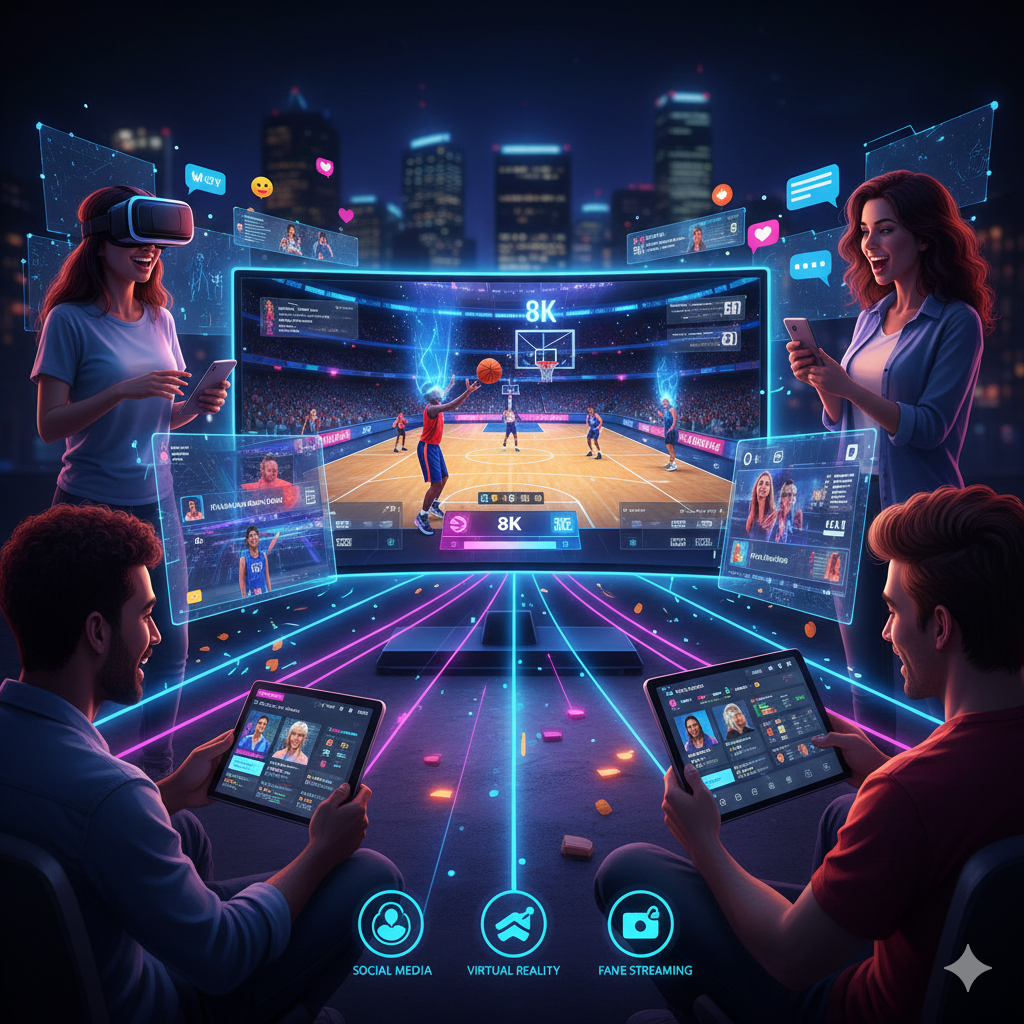
Sports marketing has evolved dramatically with the rise of digital platforms and changing fan expectations. Traditional advertising methods are being replaced by data-driven, interactive, and personalized marketing strategies that engage fans across multiple channels.
Digital platforms allow sports brands to reach global audiences through social media, streaming services, and mobile apps. Fans can follow teams, interact with players, and access exclusive content anytime, anywhere.
Personalization is a key trend in sports marketing. Data analytics helps organizations understand fan preferences and deliver tailored content, offers, and experiences. Personalized campaigns improve engagement and loyalty.
Influencer and athlete-driven marketing has also gained prominence. Athletes act as brand ambassadors, connecting authentically with fans and amplifying brand reach.
Technology enables immersive experiences such as virtual reality, augmented reality, and interactive live events. These innovations enhance fan engagement and create new revenue streams.
Despite these advancements, sports marketers must navigate challenges related to data privacy and platform fragmentation. Ethical data usage and transparency are essential.
In conclusion, digital transformation is reshaping sports marketing. Brands that embrace innovation and fan-centric strategies can build stronger connections and drive long-term success.







Teachers, Nurses, and Child-Care Workers Have Had Enough
There is evidence that the food industry designs ultra-processed foods to be...
 Oprah2 Mins read

Winners of the 2022 Nature Conservancy Photo Contest
There is evidence that the food industry designs ultra-processed foods to be...
Oprah2 Mins read


Leave a comment