
DSPs Explained: How Demand-Side Platforms Actually Work
 OprahDecember 16, 20251 Mins read0
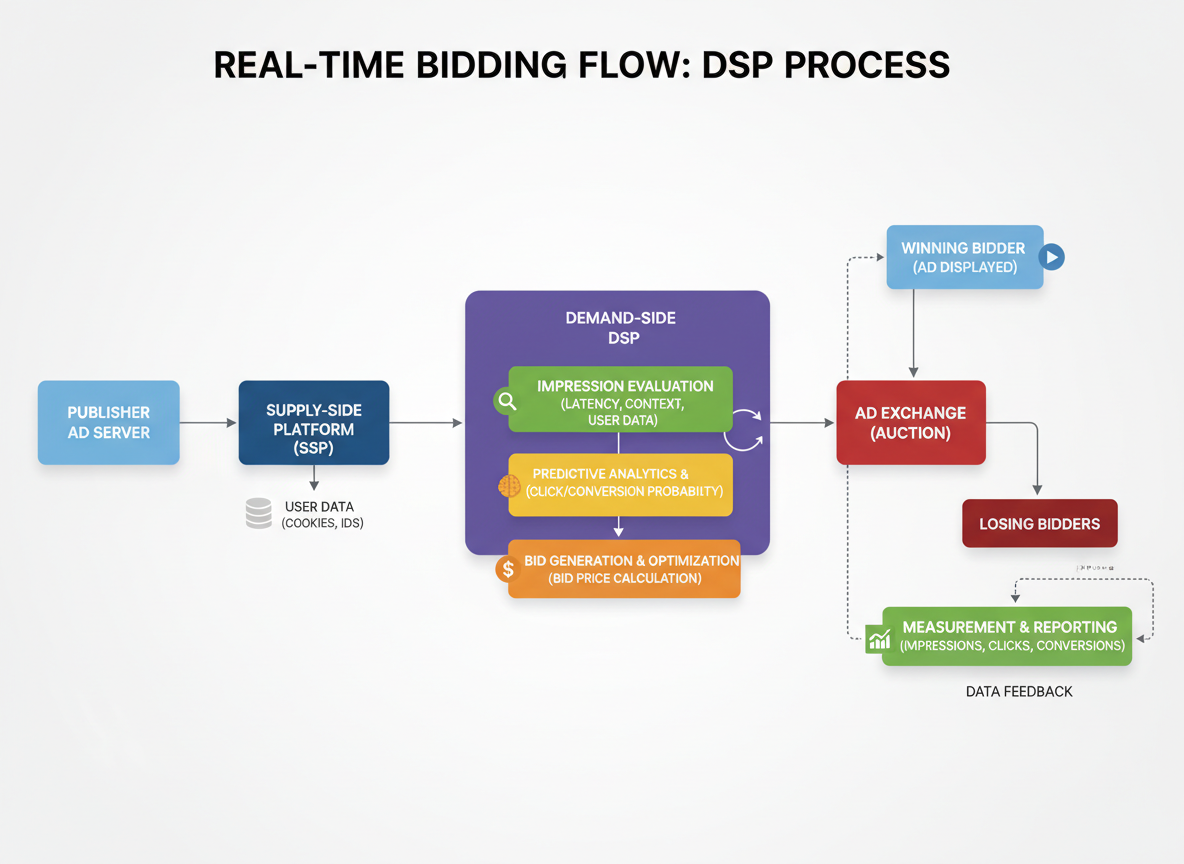
Most marketers use DSPs but don’t understand how they operate under the hood — which leads to bad targeting, wasted spend, and unrealistic expectations. A DSP isn’t just a media-buying dashboard; it’s a real-time decision engine that participates in millions of auctions per second.
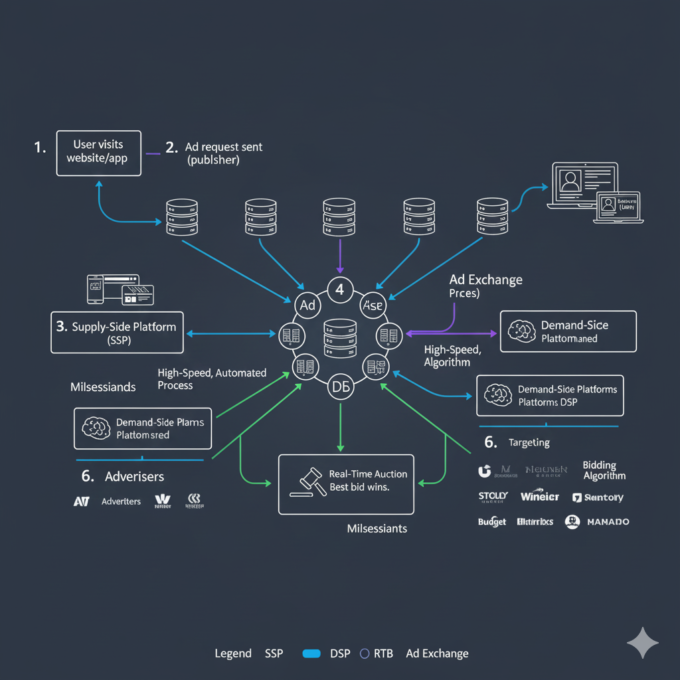
DSPs plug into multiple supply sources (SSPs, ad exchanges, private marketplaces). When a user loads a webpage or app, an SSP sends a bid request containing data: device type, location, context, ad slot size, and often behavioral signals.
Within milliseconds, the DSP evaluates the user profile, applies targeting rules, checks frequency caps, analyzes historical performance, considers budget pacing, and predicts conversion probability using machine learning models. If the user is valuable, the DSP submits a bid.
Contrary to belief, DSPs don’t simply “buy impressions.” They optimize toward goals — CPA, ROAS, viewability, or reach. Advanced DSPs use multivariate prediction models to determine the maximum bid price that still remains profitable.
Creatives also influence bidding. DSPs analyze which combinations of creative + audience + placement historically yield results. Better predictions = cheaper conversions.
Marketers fail when they over-target or run conflicting rules. DSPs need room to learn; restricting audiences too tightly kills scale and raises CPMs.
Understanding how DSPs evaluate each impression empowers marketers to set smarter strategies, improve bidding logic, and avoid common pitfalls.









Leave a comment