

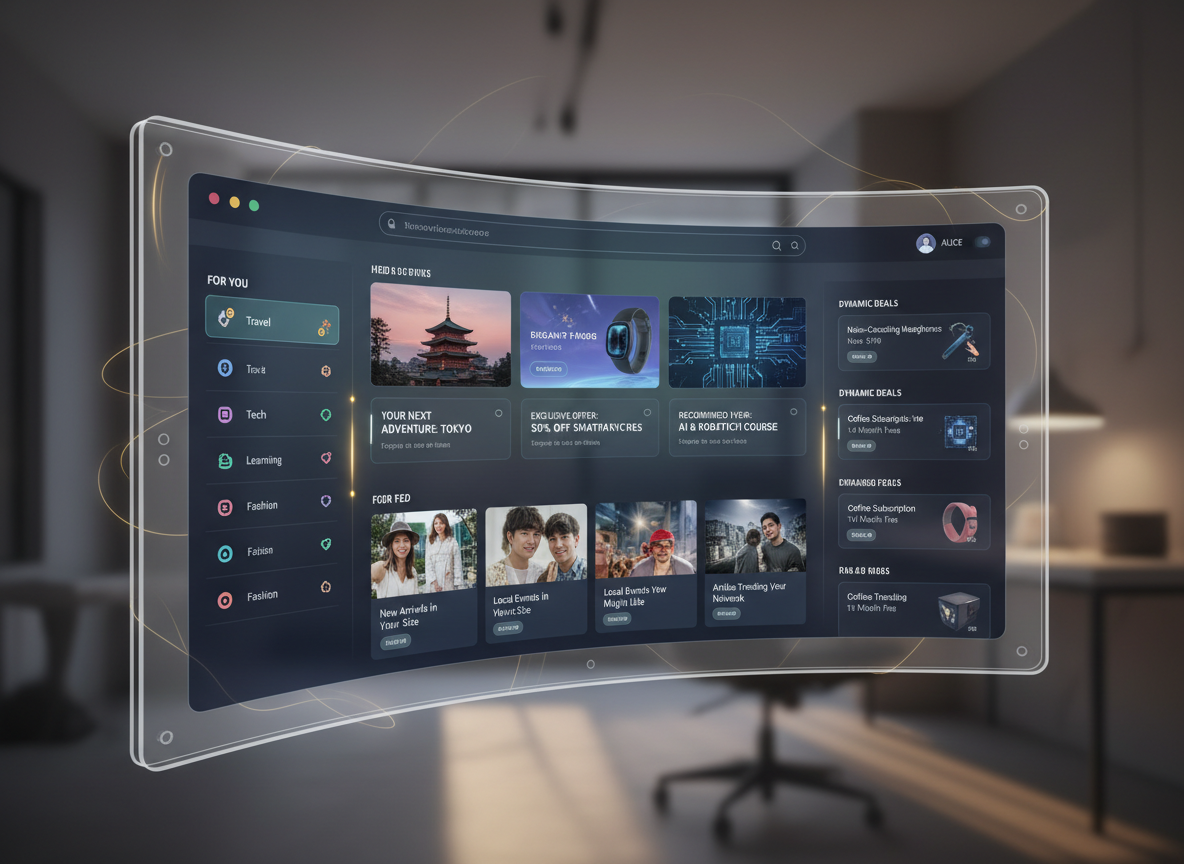
Personalization used to mean adding a name to an email. Today, AI-driven engines personalize entire experiences — messaging, timing, product recommendations, offers, and content — based on real-time behavior and predictive insights.
The foundation is first-party data: browsing behavior, purchase history, clicks, time spent, and engagement patterns. AI models analyze these signals to create dynamic user profiles that update constantly.
AI personalization engines predict:
- What a user is likely to buy
- When they’ll open emails
- Which channel they prefer
- What content will engage them
- When they’re at risk of churning
These predictions drive automated actions. Email content blocks change per user. Website banners adapt to individual preferences. Push notifications trigger at optimal times. Product recommendations shift based on micro-signals.
The most advanced systems combine user-level data with contextual elements like time of day, location, weather, or device type to refine personalization further.
AI-powered personalization improves not just conversions but customer lifetime value. Users feel understood — not targeted.
The biggest mistake brands make is not feeding enough quality data to their AI systems. Personalization algorithms require clean, unified, real-time information. CDPs are becoming essential infrastructure for this reason.
AI personalization is no longer optional. It is the standard for any brand competing in a crowded digital market.









Leave a comment