
How Generative AI Is Transforming Marketing Teams
 OprahDecember 16, 20251 Mins read2
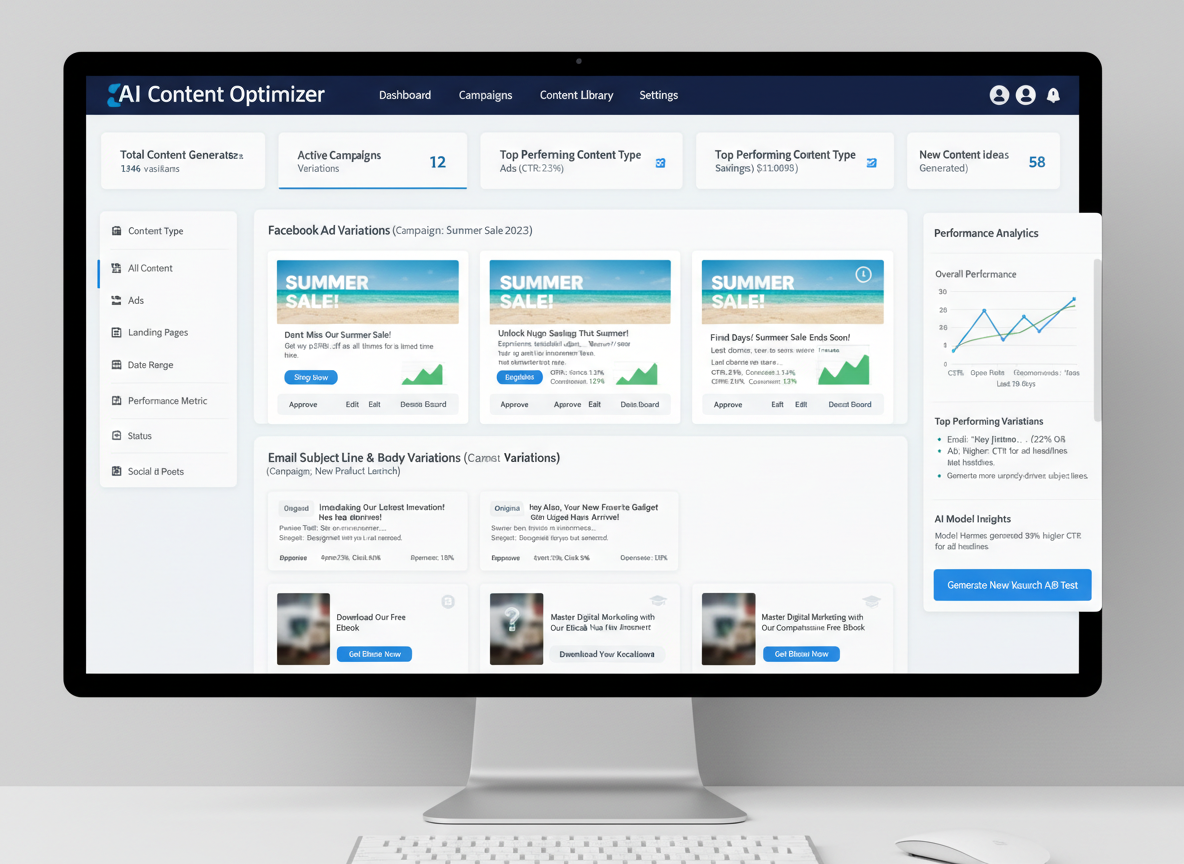
Generative AI has redefined what marketing teams can produce and how fast they can execute. What once required entire creative departments can now be prototyped in minutes. But the real impact isn’t speed — it’s scale, personalization, and strategic leverage.
The first major shift is in content creation. AI tools generate blogs, landing page copy, product descriptions, social posts, ad headlines, and emails. Instead of spending hours drafting, marketers focus on refinement and strategy. This increases productivity without expanding headcount.
The second transformation is creative iteration. AI can generate hundreds of variations of an ad concept, headline, or message. Teams test more ideas, run experiments faster, and improve performance through rapid iteration.
Personalization is another breakthrough. AI creates tailored content for every audience segment — even every individual if needed. This allows mass personalization without manual labor, improving click-through rates and customer engagement.
AI’s impact isn’t limited to writing. It enhances SEO, predicts trending topics, analyzes competitor content, and suggests high-impact keywords. It identifies content gaps and recommends new pages to rank faster.
Generative AI also integrates into design workflows, creating images, layouts, storyboards, and video drafts. Designers no longer start from scratch; they refine AI-driven concepts.
The future is hybrid: humans for strategy and brand judgment, AI for execution and scale. Teams that adopt generative AI outpace competitors dramatically — not because they work harder, but because they work smarter.










Leave a comment