
How to Build a Customer Journey Map That Converts
 OprahDecember 16, 20251 Mins read3
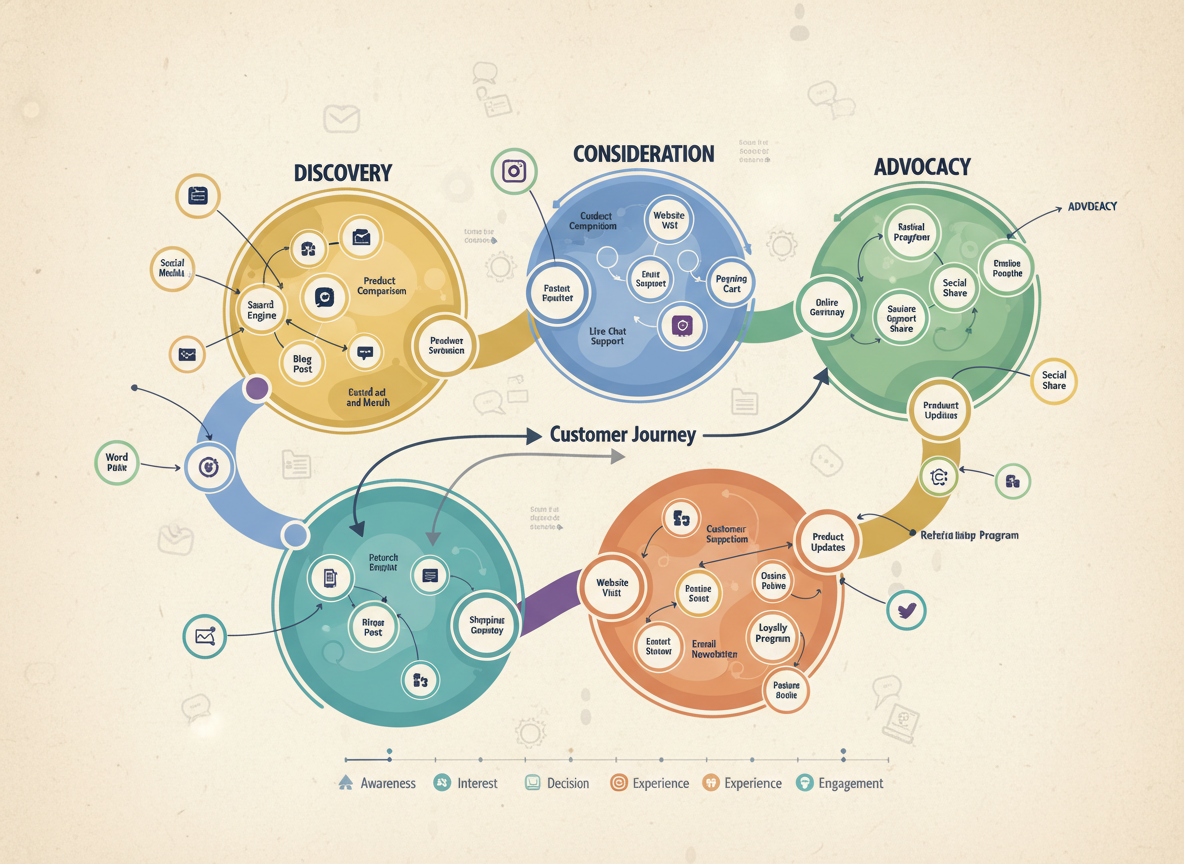
Customer journey mapping is more than a visualization exercise — it’s the foundation of effective marketing. A good journey map reveals pain points, motivations, triggers, and behavioral patterns that shape conversion decisions. But most brands map journeys based on assumptions instead of real data, which leads to flawed automation and broken experiences.
The process begins with identifying lifecycle stages: awareness, consideration, evaluation, purchase, onboarding, retention, and re-engagement. Each stage requires different messaging, timing, and value propositions.
Data plays a critical role. Marketers must analyze user behavior through analytics tools, CRM interactions, heatmaps, and customer interviews. Journey maps built on actual behavior outperform assumption-based maps every time.
Next, identify moments of friction — pages with high bounce rates, forms with high abandonment, emails with low engagement, or onboarding steps that confuse users. These friction points become prioritization targets for optimization.
Effective journey maps incorporate multi-channel touchpoints. Customers don’t move linearly — they jump between channels. Email, SMS, ads, social, website, and support interactions all influence decisions. A meaningful journey map connects these interactions into a cohesive story.
The final step is automation. Once the journey is mapped, marketers build automated workflows that deliver the right experience at each stage. AI enhances this by predicting intent and personalizing content dynamically.
A well-designed journey map doesn’t just convert — it reduces churn and improves lifetime value.










Leave a comment