
Behavioral Triggers: The Secret to High-Conversion Campaigns
 OprahDecember 16, 20251 Mins read3
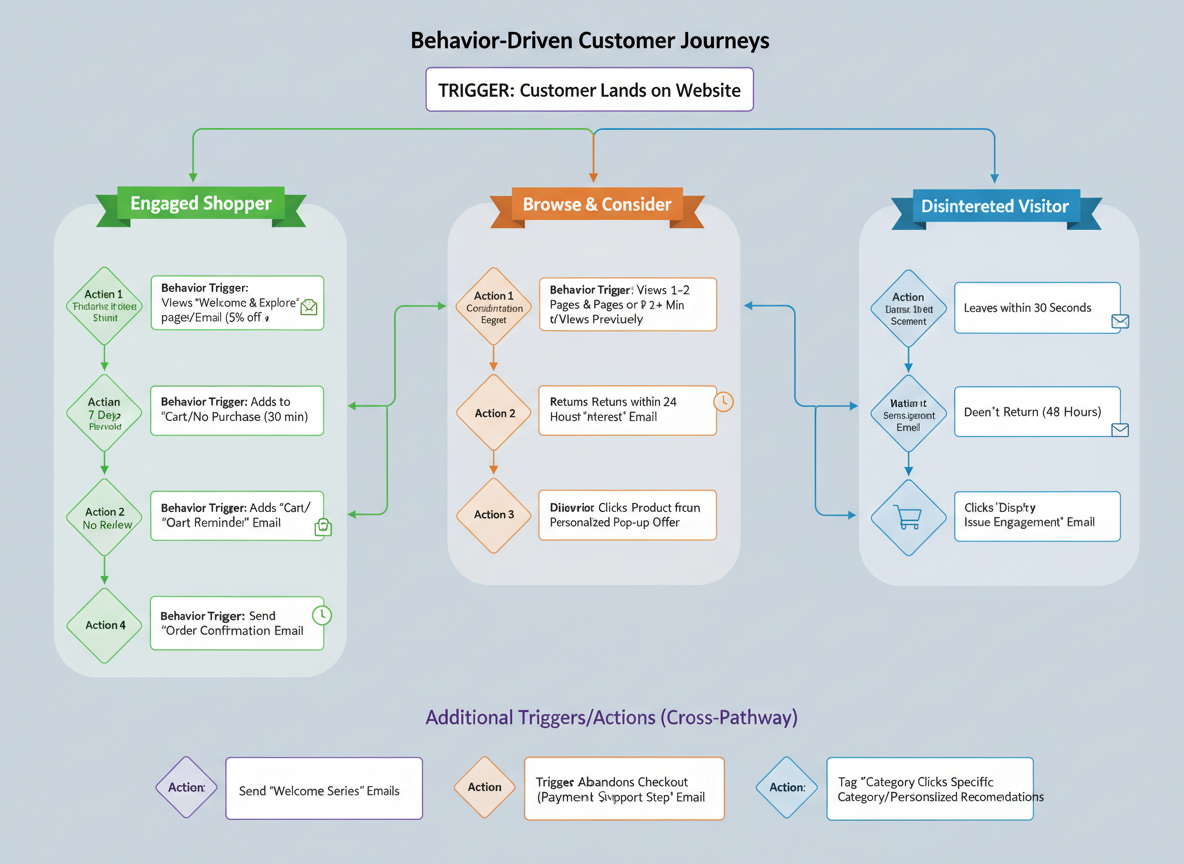
Behavioral triggers are the foundation of high-conversion automation. Instead of sending mass messages, brands deliver hyper-relevant interactions triggered by actions customers take—or fail to take. These triggers consistently outperform static campaigns because they align with real user intent.
The most powerful behavioral triggers include browse abandonment, cart abandonment, product interest, category interest, and repeat-visit triggers. These signals reveal what a user is actually considering, making the messaging far more targeted.
Intent scoring amplifies this. AI analyzes micro-behaviors—scroll depth, session time, page frequency, and click patterns—to determine how likely a visitor is to convert. High-intent users get strong offers or time-sensitive messages; low-intent users receive nurturing content.
Behavioral triggers extend beyond e-commerce. SaaS companies use trial activity triggers, onboarding friction triggers, upgrade recommendations, and churn-risk alerts. B2B brands use content consumption triggers to identify qualified leads.
The key to success is immediacy. Triggered messages sent within minutes convert dramatically better than those sent hours later. Timing proves intent.
Content must also match the behavioral signal. A user who viewed pricing needs reassurance; a user who abandoned checkout needs urgency; a returning user needs incentives or reminders.
The future of behavioral triggers is multi-signal orchestration. Instead of one trigger producing one email, systems use clusters of behaviors to shape customer journeys automatically.
Behavioral automation is the difference between shouting at customers and having a conversation with them based on what they actually do.






Leave a comment